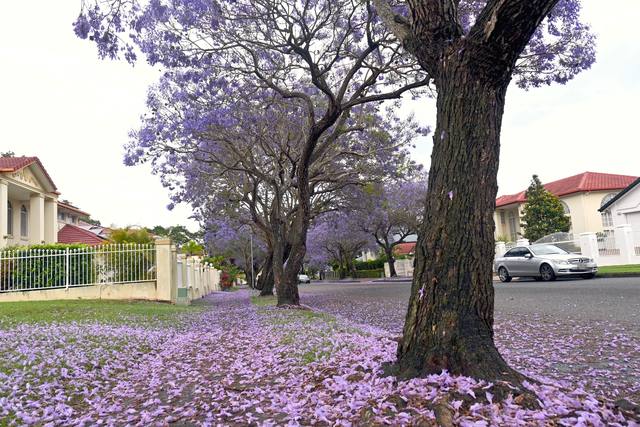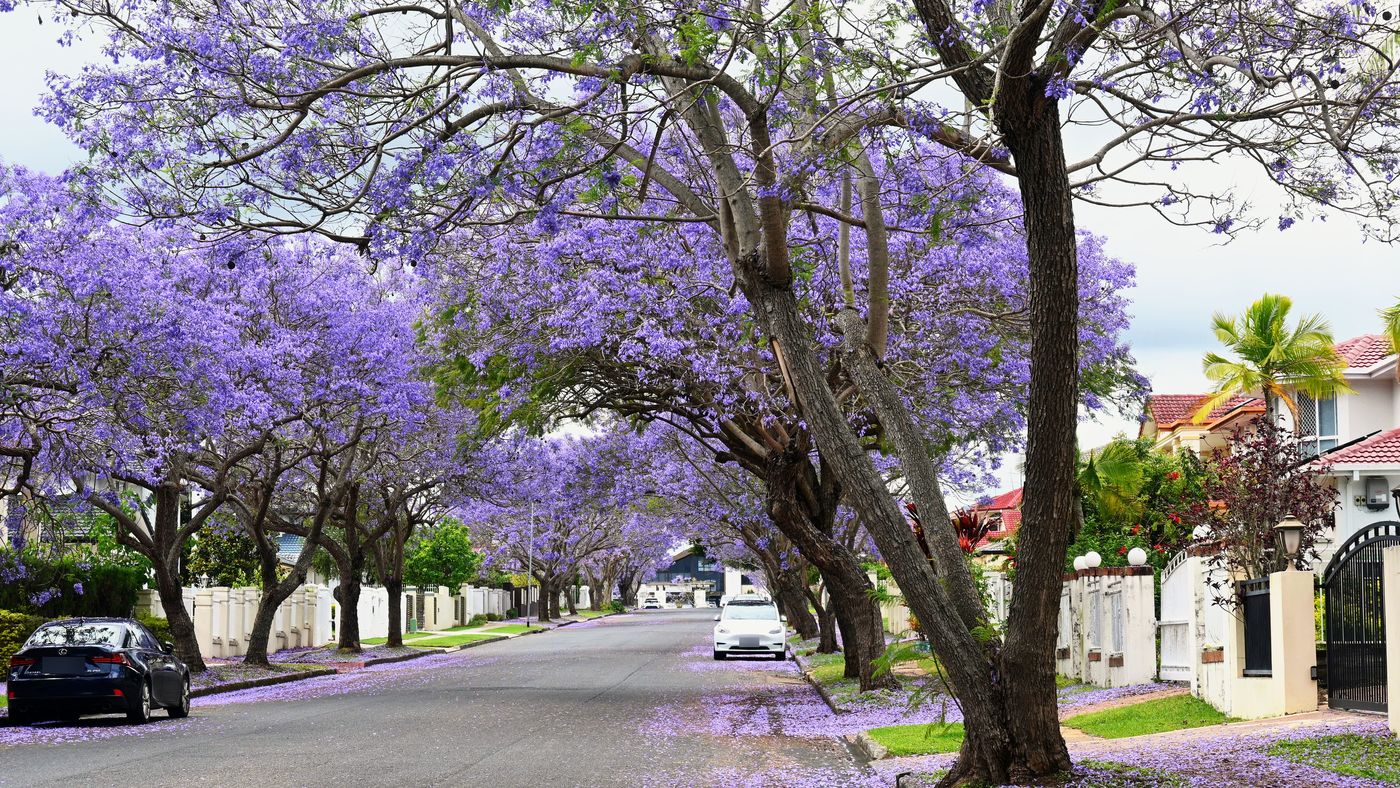
Rain was forecast for the weekend, so I got to the Sunnybank Hills jacarandas early on Saturday morning, before it came. I spent about an hour on the street, and that afternoon it really poured. This post is about that hour: how I planned the shots with AI, how the grey-day photos were fixed without generating anything, and one thing about jacarandas many people don't know. They aren't native to Australia.
The video is from my Cantonese podcast, Brisbane真好, filmed in 4K with my own photos and clips. It has English subtitles.
Why shoot the jacarandas before the rain?
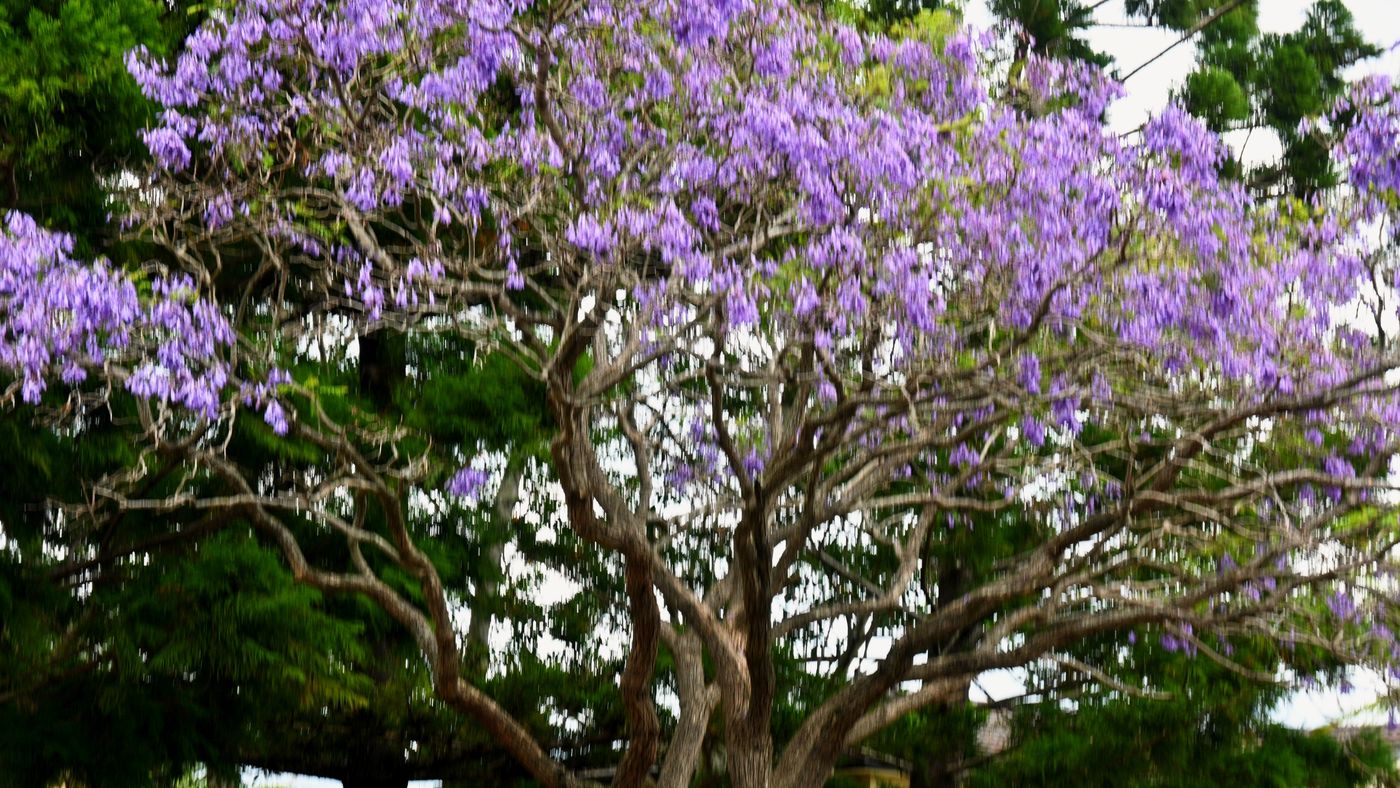
Because the rain takes the flowers. It happens every year: around late October or early November one big storm comes through and knocks most of the flowers off.
On Friday the forecast was already talking about heavy rain, so I went to Sunnybank Hills and took a few shots first, in case Saturday was a washout. Saturday morning was dry, so I went back for about an hour. By the afternoon it was pouring.
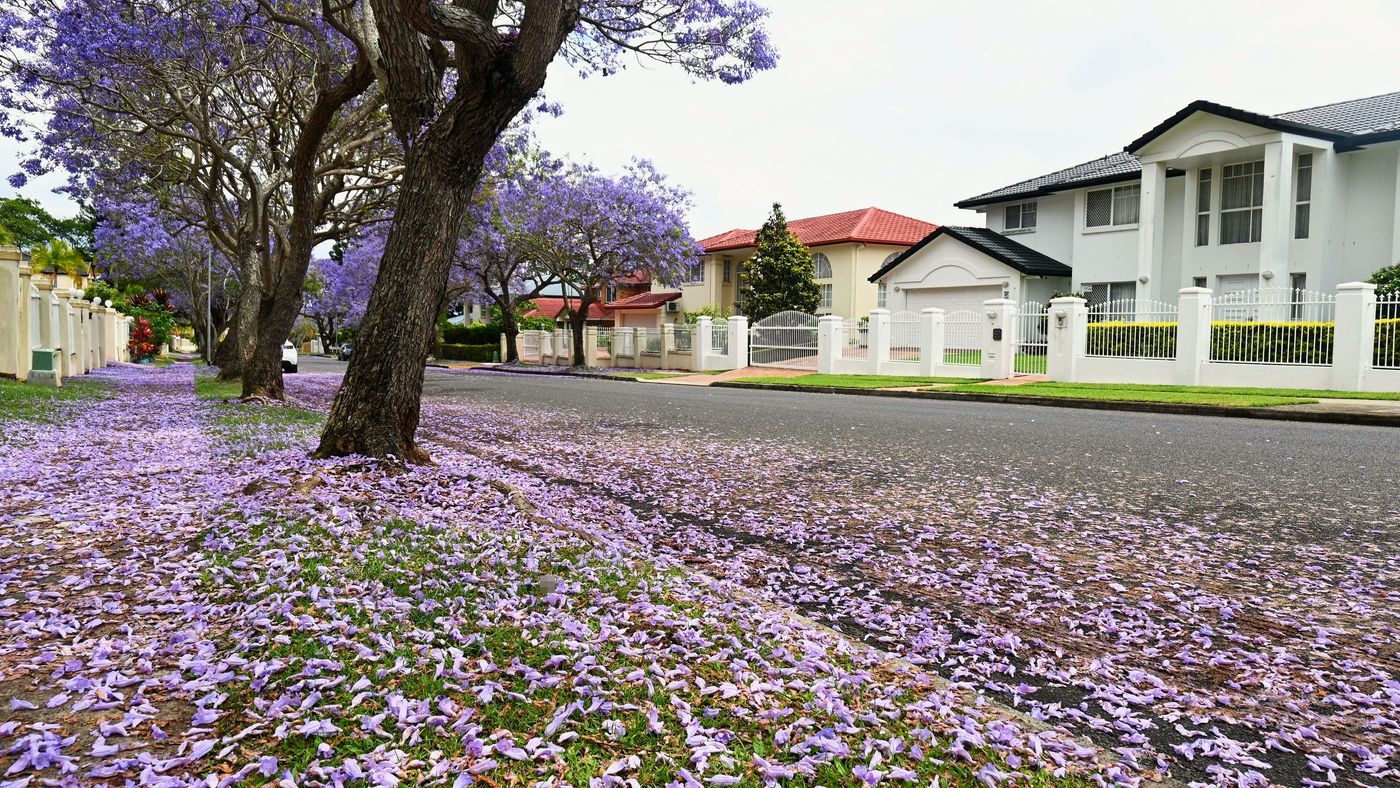
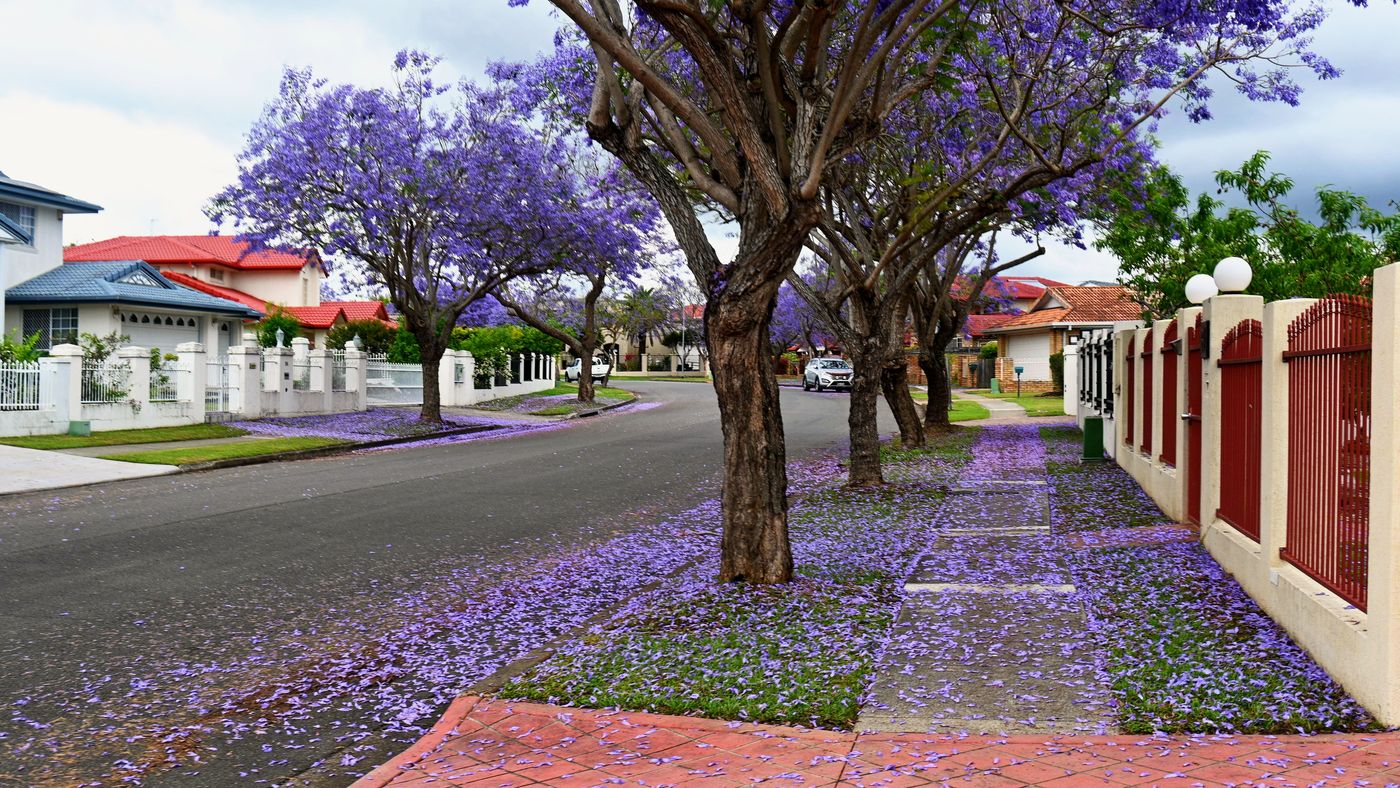
You could already see petals falling along the street. After a storm the trees go bare, and that is the end of it for the year. If you saw my last post about the purple carpet after Thursday's heavy rain, this is Sunnybank Hills again, a couple of days later and a few hours ahead of the next storm.
Do photos look worse on a cloudy day?
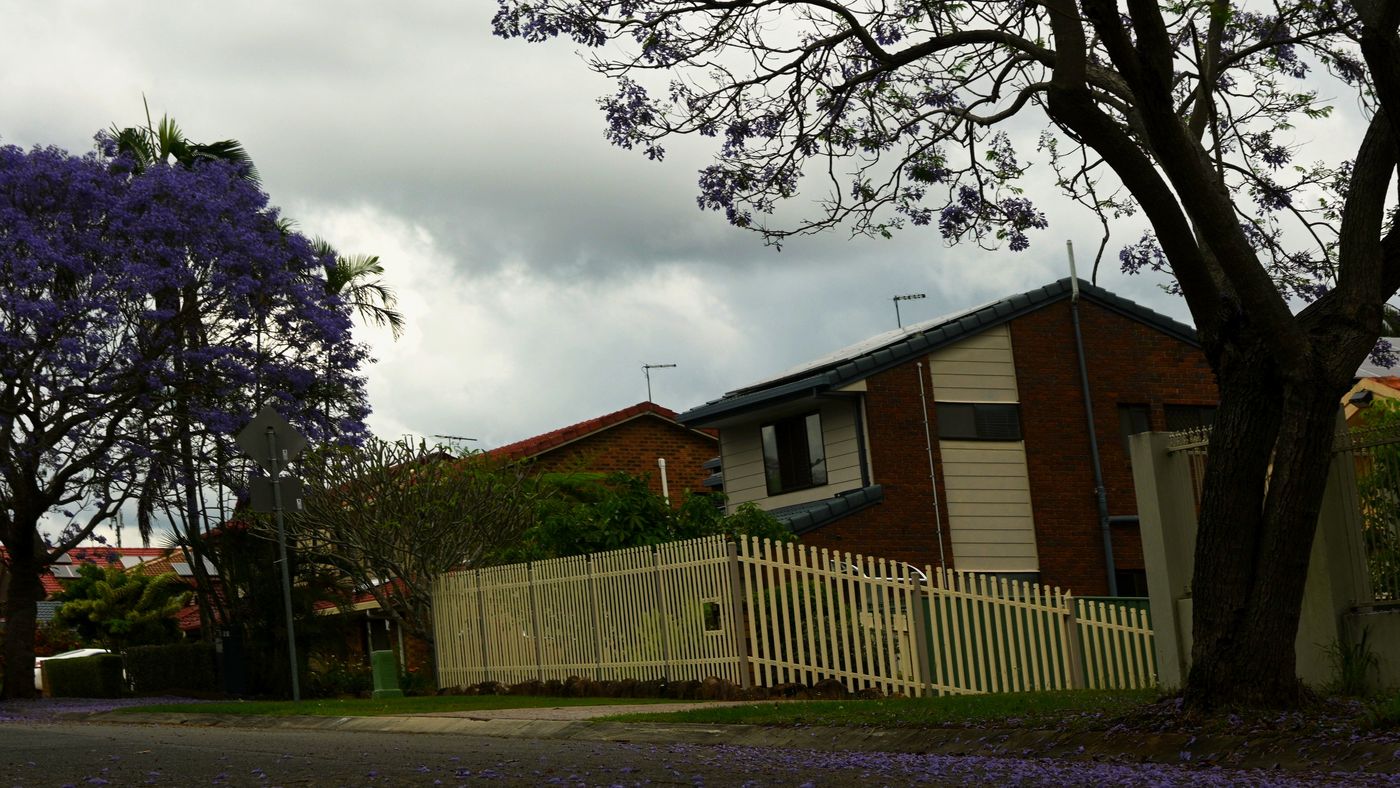
Yes, a lot worse. Even without rain, an overcast sky with no sun makes everything look flat and a bit grey.
The purple loses its punch and the sky turns white. That was the light I had, so most of the work happened afterwards.
Does AI photo editing mean the photos are fake?
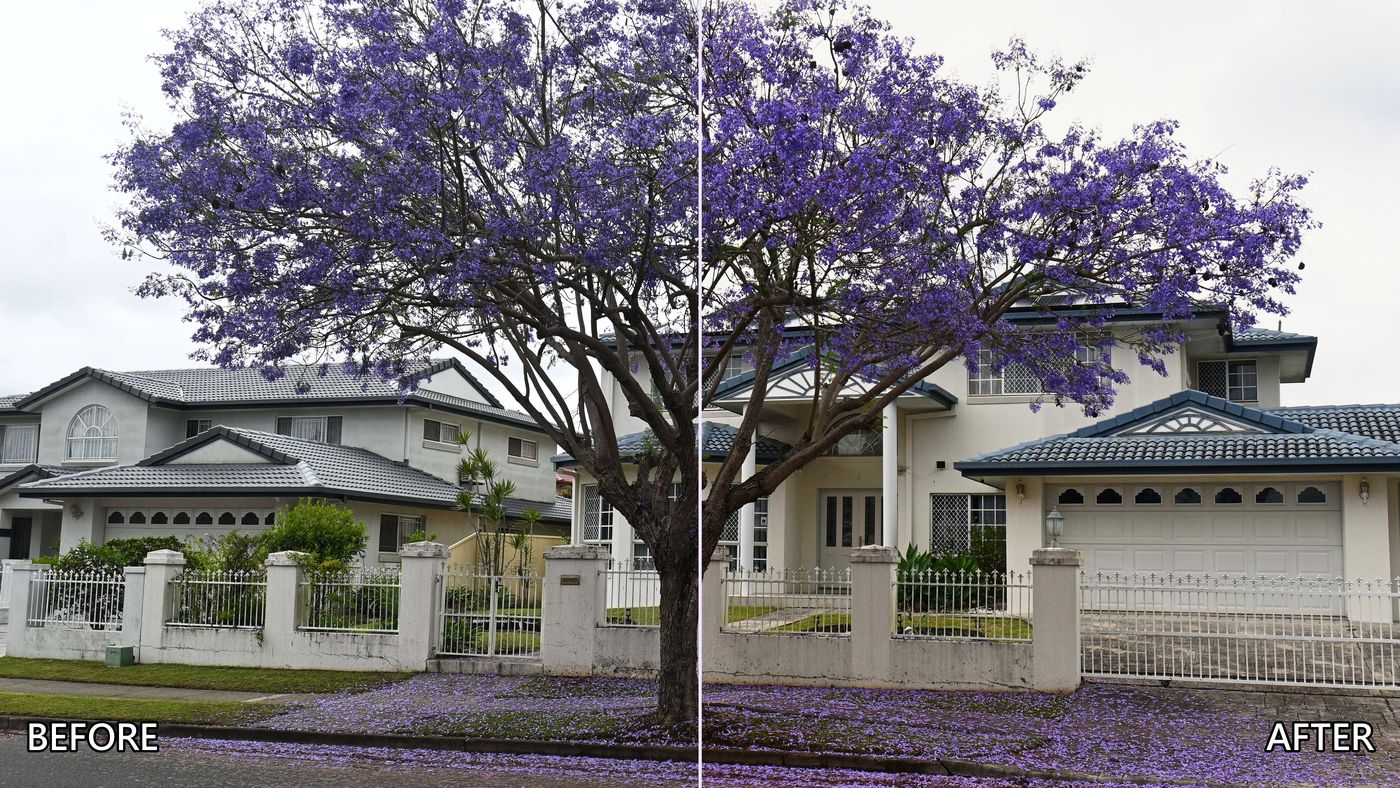
No. The AI didn't generate anything. It wrote Python code that adjusts the exposure, white balance and contrast of the photos I took.
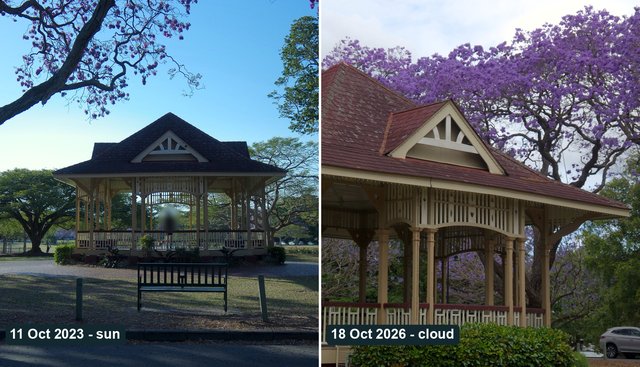
I asked Claude to fix the light, and it wrote a small script: set the white balance from the clouds and white walls, stretch the levels, lift the shadows under the trees, and add a little colour. Then it cropped each photo to the best 16:9 framing for the video. Here is one photo straight from the camera on the left and after the script on the right.
Coding tools are clever enough now that they can write the editing software for you. Some people say that's bad news for Photoshop. I'm not going that far, but for me it has changed how I edit. If you have a good eye, you can tell it exactly how to crop and adjust. If you don't, you can let it decide. I'm honestly in the second group. I don't have much of an artistic eye, so I lean on AI a lot.
It also blurred every number plate and face, in the photos and in the video. Nothing in the video is AI-generated: no AI images, no AI music, and the voice is mine.
How can AI help you plan jacaranda photos?
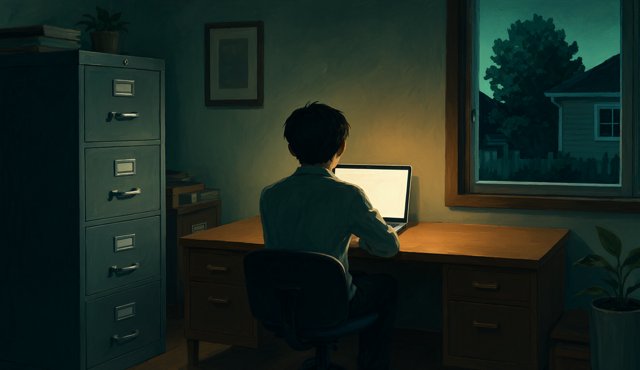
I take one test shot on my phone and ask an AI how to frame it. It suggests the shots, the angle and the settings to try.
My routine at the moment:
- Take a quick photo of the scene on my phone.
- Ask Gemini how to frame it and how to edit it.
- Take a photo of my camera lens too, so it knows which lens I'm using. It then explains which focal length to use and why.
- Shoot a lot with the real camera: different white balance settings, different angles, close focus and far focus.
- Hand the whole pile to Claude to sort and fix.
Why Gemini? Only because I already pay for a subscription with plenty of tokens. I'm not saying it's the best. Other models are good too, and some people swear ChatGPT or Claude is better. My Claude tokens mostly go on editing video, so Gemini gets the planning job.
I'm still learning. Focal length and depth of field are things I'm picking up as I go, one shoot at a time.
Are jacarandas native to Australia?
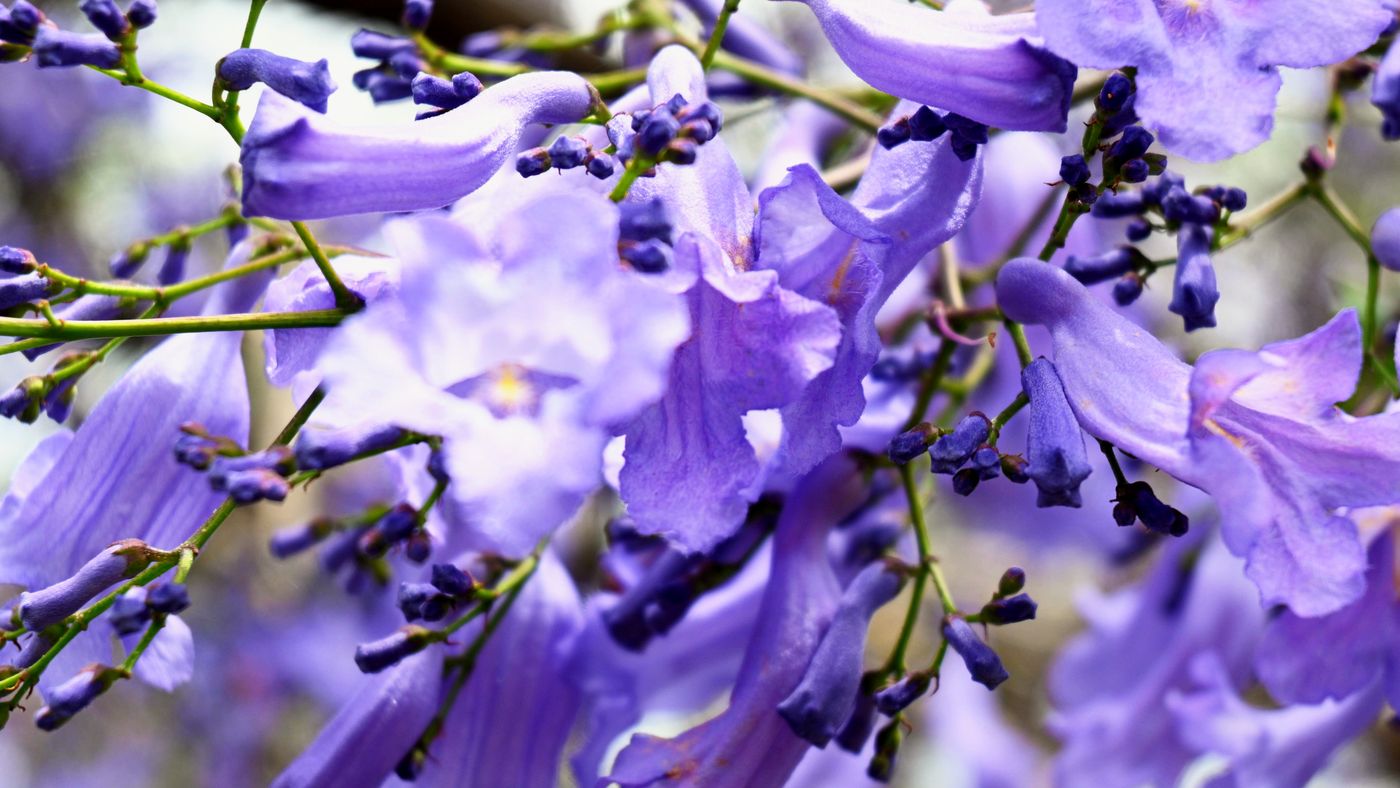
No. Jacarandas come from South America, from southern Bolivia and north-western Argentina, and Queensland lists them as an environmental weed.
They're beautiful, and in a suburb like Sunnybank Hills I think they're fine. It's already a built-up area. Native bushland is different. Queensland's WildNet database says jacarandas have spread from gardens into woodland and creek banks, where their shade stops native plants regrowing and their seedlings can form thickets. Brisbane City Council lists them as pest vegetation too.
So my view is simple: the city is the best place to enjoy jacarandas, and the bush is better off without them.
How do you photograph jacarandas without annoying the neighbours?
Stay on the footpath and keep it quiet. If the street is busy, come back later. These are people's front yards.
Plenty of people walk past and stop for a photo, mostly on their phones, and that's fine. Last year, on a sunny day, I saw people dressed up for photos to post online. The houses on that street are lovely too, and I'd worry about residents getting fed up and complaining if it turned into a crowd.
I prefer to shoot quietly with my camera and not get in anyone's way. Crowds and parked cars spoil the shot anyway. A quiet street with nobody in it is my favourite kind of jacaranda photo.
Where can you see more Brisbane jacarandas?
If you want the famous spots, my Brisbane jacaranda photo guide covers New Farm Park and UQ, and the New Farm Park 2026 album has 41 photos. For a rainy-morning version of my own street, see jacarandas after the rain on a morning jog.
And if you want to know how I make these videos, my Claude video workflow post walks through it.
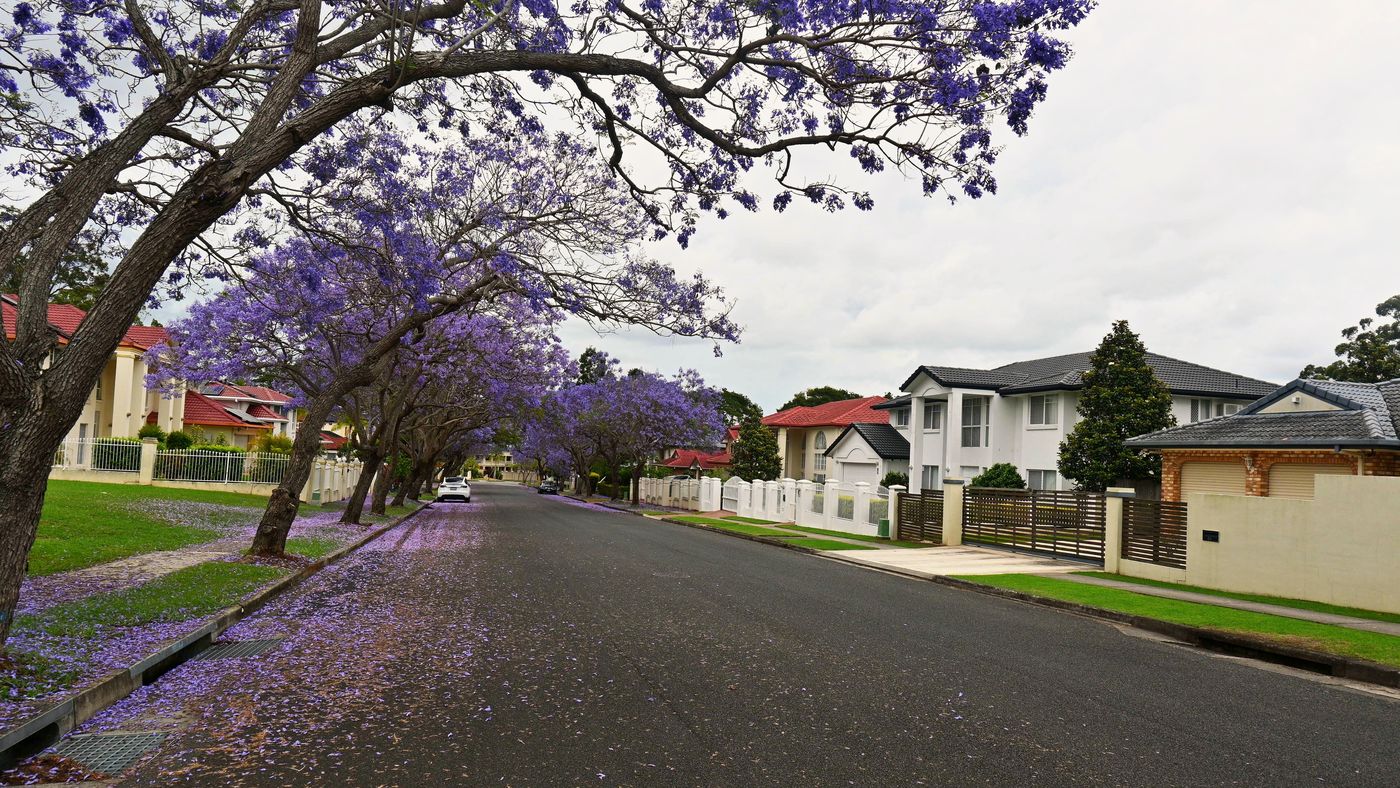
I'm experimenting with this kind of video, telling a story with a camera, so go easy on me. Which shot did you like best?
Sources
- Queensland Government WildNet: Jacaranda mimosifolia species profile (origin and environmental weed status)
- Brisbane City Council weed identification: Jacaranda
Date checked: 25 October 2026. Photos and video by Michael Leung. AI (Claude Opus 5.5) helped with research, writing, colour correction and blurring; no images were generated.